Members
The UNESCO Chair is composed by a multidisciplinary group of experts from companies and academic environment.
Senior
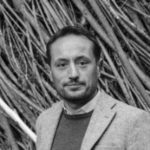
Marco Bezzi
is an environmental engineer: when the Environment is not only the research interest but also the best playground for his favourite activities such as Windsurfing and Mountain climbing. After his PhD in the Analysis of Natural Hazard in Mountain Areas, Marco Bezzi is dealing with teaching activity in Water Resources Management and Irrigation system and he is lecturer in the course “Practical Stage in Environmental Context” at the University of Trento for the UNESCO Chair. His academic activity is integrated with the free-lance activity at national and international level facilitating the match-point between the theoretical and the applied engineering.
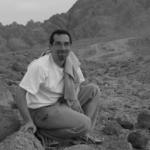
Marco Ciolli
is associate professor in Forestry and Silviculture at the University of Trento, he teaches Applied Ecology, Field sampling and Spatial Ecological Modelling, Geographic Information Systems. He has taught and organized courses and International Summer Schools in South Africa, Rwanda, Tanzania and is involved in many national and international research projects. He loves forests, nature and biodiversity and is particularly fond of Tropical Ecosystems both marine and terrestrial. He uses and supports Free and Open Source software in research and education since 1995 and is member of OSGEO.
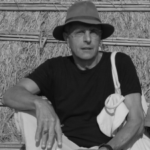
Corrado Diamantini
is currently collaborating at the MUDAR project. Recently retired, he was Full Professor of Urban and Regional Planning at DICAM, where he held the positions of Head of the School in Engineering for the Environment and the Territory and Deputy Director of the School in Local Development. Decades of research and planning experience in Africa, mainly carried out in the context of the university and development cooperation activities, include the scientific coordination of the drafting of the District Plan of Caia, Mozambique and of the Towns Plans of Caia and Sena, Mozambique. And again, the collaboration on the Project for the improvement of accesses to rural areas in Madagascar and the Project for the regeneration of Tabriquet-Nord in Rabat. He was also involved in drafting the Addis Ababa Master Plan, as a permanent member of the Addis Ababa Master Plan Project Office.
Sara Favargiotti
is Associate Professor of Landscape and Architectural Design at the DICAM, University of Trento. She has been a visiting scholar at GSD Harvard University (2016), Leibniz University Hannover (2014), and Universitat Autònoma de Barcelona (2013). Her field of research investigates the multiple identities of landscape, questioning the challenges of contemporary life through a regenerative approach, with a particular interest in fragile territories, emerging infrastructures, and adaptive dynamics. Among research activities, she lead the Caritro project “Il Sistema dei Forti Trentini come patrimonio UNESCO” (2022-2024). Since 2025 she is member of the Scientific Committee of the School for the Governance of Territory and Landscape (TSM|step). She is also co-founding partner and scientific advisor of the innovative startup and benefit corporation RUMA S.r.l..
Davide Geneletti
is Professor of Spatial Planning at the University of Trento. His research focuses on the assessment of environmental impacts of plans and projects, the study of ecosystem services and nature-based solutions, and the adaptation of cities to climate change. He has previously served as a Mid-Career Research Fellow in Sustainability Science at Harvard University, a Visiting Scholar at Stanford University, and a visiting scientist at institutions in Europe, Asia, Latin America, and Australia. He has provided consultancy services to UNEP, UN-HABITAT, and the European Commission. He received the F.W. Bessel Research Award from the Alexander von Humboldt Foundation and is included in Clarivate’s Highly Cited Researchers list. He serves on numerous scientific committees, including, at the national level, those of WWF and the Dolomites UNESCO Foundation, and is a member of the Italian Academy of Engineering and Technology.
Marco Ragazzi
is currently full professor in Environmental and Sanitary Engineering in the University of Trento. He graduated in Sanitary Engineering, Technical University of Milan, Italy (with honours). Noseda Award winner as 1988 best graduated in Hydraulic Engineering in the Technical University of Milan. He achieved a doctorate in Environmental Sanitary Engineering. Ambrogino d’Oro Award (Municipality of Milan, 2006) for the contribution to the solution of the wastewater emergency of the city. Research activity mostly concerning: a) waste treatment plants optimisation to reduce human exposure to pollutants; b) air and water quality management in anthropized areas. Co-author of more than 200 scientific documents in the Scopus database. Presently he is Rector’s Delegate for Environmental Sustainability in the University of Trento.
Marco Toffolon
is professor of hydraulics at the University of Trento. He teaches environmental fluid mechanics, is the head of the Physical Limnology Laboratory (PhyLL), and serves as deputy director for international relations at the Department of Civil, Environmental and Mechanical Engineering. His research interests cover various areas of environmental fluid mechanics, including physical limnology, sediment transport, morphodynamics, tidal hydrodynamics, eco-hydraulics, and water quality. His main area of expertise is the mathematical modelling of environmental systems. He is also the coordinator of the Erasmus Mundus Joint Master’s programme ‘Engineering for Environmental Sustainability and International Cooperation’ (EESIC, https://eesic.eu/), jointly offered by UniTrento, Universidade de Lisboa (Portugal) and Universitat Politècnica de València (Spain) – a programme that is closely related to the scope of the UNESCO Chair.
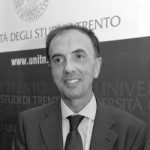
Marco Tubino
is Professor of Hydraulics and member of the Department of Civil, Environmental and Mechanical Engineering of the University of Trento. He graduated in Chemical Engineering at the University of Genoa and achieved a doctorate in Hydrodynamics at the University of Padua. He served as Dean of the Faculty of Engineering and Head of the Department. Since its foundation in 2008, he has been member of the Steering Committee and of the Scientific Board of the Centre for International Cooperation of Trento, of which he became president in 2020. He is presently the President of the Conference of the Italian Schools of Engineering (CopI). His research interests are river morphodynamics, environmental hydraulics and environmental impact assessment. Marco isthe senior leader of the GIAMT research group.
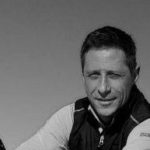
Alfonso Vitti
is Associate Professor in Geodesy and Geomatics at the University of Trento. Active in exploiting data from Earth observation satellite missions for environmental applications and for retrieval of geometrical and physical quantities for modelling and monitoring of environment. He is interested in analytical and methodological aspects of Geomatics and likes field activities as well. His expertise comprises development and teaching Geographic Information Systems and he has a long experience in global positioning satellite systems (GNSS), commonly at hand of colleagues, students and of the same experts of the UNESCO Chair.
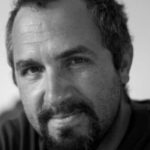
Guido Zolezzi
is a member of the Department of Civil, Environmental and Mechanical Engineering. Environment and people: Guido Zolezzi particularly enjoys interacting with and understanding both of them, and this is a continuous source of motivation for his research and educational activities. Guido is presently the Chairholder of the UNESCO Chair in Engineering for Human and Sustainable Development at the University of Trento, and the Director the SMART Erasmus Mundus Joint Doctorate (http://www.riverscience.it). He is enrolled as assistant professor in Hydraulics and is the reference person for the University of Trento at CUCS, the National University Network for Development Cooperation. His research interests are river morphodynamics, environmental hydraulics, eco-hydraulics in natural and regulated streams and water resources management in the developing world. Guido’s research is most within the GIAMT research group (http://www.unitn.it/en/giamt).
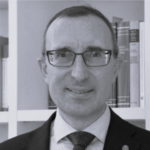
Massimo Zortea
is a lawyer and university adjunct professor, focusing on environmental and energy law and policy, with longtime experience in sustainable development and international environmental cooperation. Admitted in Italian Higher Jurisdictions, he is founder member and CEO of SAFE Green law firm (www.safegreen.it). He teaches at the University of Trento, where he holds, in particular, the courses “Engineering for International Sustainable Development” and “Governance Participatory Processes.” He also collaborates with several higher environmental education institutions. He is member of the scientific community in theUNESCO Chair in Engineering for Human and Sustainable Development at UniTrento. He founded Green VIS (Rome), a working team that applies the Environmental Mainstreaming Approach in international cooperation. He is former Scientific Coordinator of the AFA School (Higher Agri-Food Training, Bari). He has been and still is involved in various Third Sector entities for over thirty years, also with managerial positions, e.g. President of VIS. Author of various volumes, papers, and articles on environmental matters, he is also editor of the editorial series “Riqualificare: ambiente ed economia circolare” (Re-qualifying: Environment and Circular Economy, Wolters Kluwer, Milan).
Junior
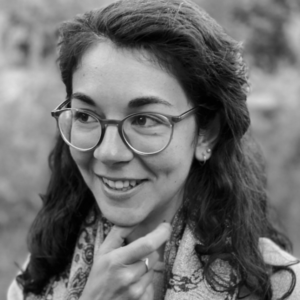
Ada Castellucci
is concluding her PhD programme ‘SUSTEEM’ (Sustainability: Economics, Environment, Management and Society), at the Department of Economics and Management at the University of Trento. Since graduating in environmental engineering, she has focused her research on bio-hazardous healthcare waste management and treatment techniques suitable for low- and middle-income contexts. Through engaging and involving local stakeholders and international experts, her studies aim to evaluate the environmental, economic, and social impacts of healthcare waste management systems, thereby facilitating decision-making processes in the transition to sustainable alternatives. For her PhD thesis, she analysed case studies in Beira, Mozambique, in collaboration with the Italian NGO CAM Consortium of Associations with Mozambique, and in Ulaanbaataar, Mongolia, with the National University of Mongolia and UNICEF Mongolia.
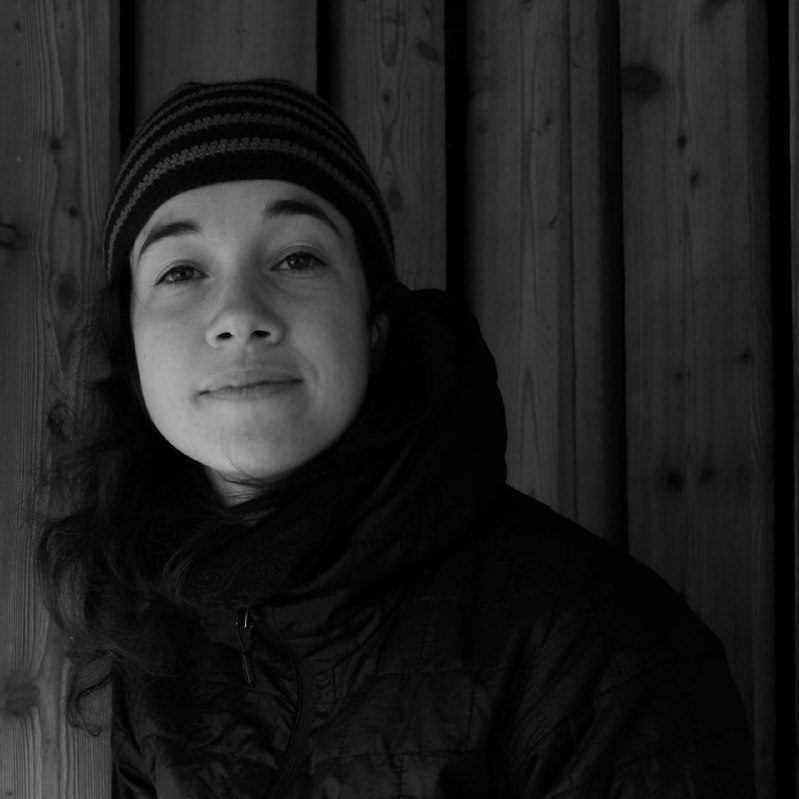
Marta Crivellaro
is a post-doctoral research fellow at DICAM, University of Trento and the Program Manager of the UNESCO Chair. Her research focuses on the eco-hydro-morphodynamics of river corridors, their conservation, management, and ecological as well as cultural values. She conducts part of her work in Albania, where she has been collaborating in international cooperation project since 2019. Her research investigates how thermal assessments can be integrated into fish habitat evaluations and the mutual feedback between riparian vegetation and hydromorphodynamic processes across diverse bioclimatic regions. She integrates fieldwork and remote sensing, statistics and social perceptions, modelling and direct observation. By combining scientific research with applied projects and stakeholder engagement, she works to bridge academic knowledge with practical strategies for river conservation.
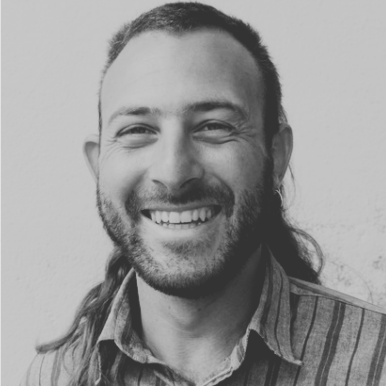
Nicola D’Alberton
is currently a Research Fellow at DICAM -Department of Civil, Environmental and Mechanical Engineering of the University of Trento. He worked in Lebanon in the framework of “Saving Water Growing Crops” cooperation project . The aim of the project is to introduce innovative irrigation technologies to face climate change induced issues such as Precision Irrigation and Rainwater Harvesting. Nicola is now working in a Transnational Education (TNE) UNITAFRICA project involving 99 universities from Italy and African Countries.
Susanna Ottaviani
is currently a Research Fellow at the DICAM – Department of Civil, Environmental and Mechanical Engineering of the University of Trento. She graduated with a master’s thesis in hydraulics on the drainage system of Macuti, an informal neighborhood in Beira, Mozambique. Susanna has just concluded her second three-month internship experience in Beira with the NGO CAM – Consórcio Associações com Mozambique. Now she is furthering her studies by working on an international cooperation project concerning urban planning and the drainage system in Macuti.
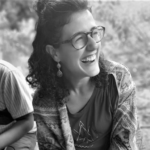
Livia Serrao
is currently a Research Fellow (Post-Doc) at DICAM of the University of Trento. Her research interests are mainly related to the mutual interaction between water resources and human communities. She has been working in surface-water field during her Ph.D. research, investigating river-floodplain dynamics and their interaction with traditional agricultural practices in tropical regions (Alto Huallaga, Peru). More recently, she has been involved in an international cooperation project concerning water-supply and sustainable drainage systems in urban informal settlements (Beira, Mozambique).
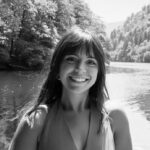
Sara Pasqualini Pecnikaj
is currently a PhD student at C3A, Centre Agriculture Food Environment, University of Trento. Her research investigates the interactions between river hydro-geomorphodynamics and riparian vegetation across diverse environments, with the goal of developing predictive models of future river–vegetation evolution. By understanding how processes such as sediment accumulation, island formation or permafrost thaw can reshape river corridors, her work aims to support communities facing related risks. During her Master’s thesis in Energy Engineering, she conducted field research in the Drin Basin in Albania, analysing the state of the basin, existing river-protection frameworks and legislation and potential future changes driven by the rapid expansion of hydropower plants. Passionate about international cooperation, she believes that impactful science emerges when research is grounded in people, their knowledge and their needs.
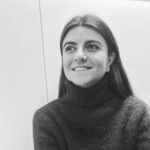
Anisa Bica
is a PhD student at DICAM at the University of Trento. She obtained her Master’s degree in Environmental Engineering, with a focus on environmental sustainability and international cooperation.Her professional experience began during her studies with SEED, an international training program that introduced her to the field of environmental engineering for development and cooperation. This experience marked the starting point of her engagement in international and applied environmental projects. During her Master’s degree, she conducted her thesis research entitled “Effects of sediment mining on river habitat availability: Río Simpson, Chilean Patagonia”, and later completed her final internship in Albania. In parallel, she concluded the TALETE Honors Programme, focused on international perspectives and cooperation. She has since been involved in several national and international project initiatives, working with multidisciplinary teams and stakeholders. She is currently in the first year of her PhD, following a research path that investigates river thermal regimes under climate change, integrating fish habitat assessment, eDNA approaches, and vegetation dynamics.
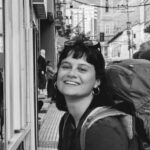
Anna Cantoni
is a first-year PhD student at the Department of Civil, Environmental and Mechanical Engineering (DICAM) at the University of Trento. Her doctoral research, within the NAANE project funded by the Italian Agency for Development Cooperation (AICS), focuses on river–floodplain dynamics in the Colombian Amazon Trapezium, with particular attention to fluvial morphodynamics, flood early warning systems, and hydro-morphological tools for local communities. She holds a Master’s degree in Energy Engineering and took part in the TALETE Honours Programme, an advanced training pathway in international cooperation and project design. During her master’s studies, she conducted field research in Guatemala on micro-hydropower for drinking water supply, which strengthened her interest in water resources and international cooperation. She later completed her Universal Civil Service in Bolivia, contributing to projects on water management, early warning systems, and geospatial and meteorological data analysis. Her broader interests include integrated water resources management, risk reduction, and participatory approaches linking scientific research with local communities in Latin America.