Projects
Research projects represent one of the main activities of the UNESCO Chair in Engineering for Human and Sustainable Development, and are structured through various international cooperation initiatives.
Ongoing Projects:
Muwali, Libya
2025 – 2028
Water resources governance and management
Naãne, Colombia
2025 – 2028
Integrated flood risk management
Trentino, Italy
2025 – ongoing
River thermal regime management
Trentino, Italy
2025 – ongoing
Integrated river ecosystem management
Beira, Mozambique
2022 – 2025
Sustainable urban development and local governance
Project Archive:
Municipal Upgrading of Water Systems for Local Impact –
MUWALI, LIBYA
Period:
Feb 2025- Jan 2028

Project description:
MUWALI project is a project with as Contracting Authority: Italian Agency for Development Cooperation (AICS) and funded by the European Union under the “Water Resources Management Facility” Special Measure for Libya 2023. The Overall Objective of MUWALI is to improve water resource management and water sector governance at both national and local levels in Libya with particular focus on 12 municipalities across Libya.
Expected results:
1) Enabled conditions for developing an Integrated Water Resources Management (IWRM) Plan in project municipalities;
2) Improved data management system at local level;
3) Increased knowledge and utilisation of unconventional water resources at local level.
Contact:
Nicola D’Alberton – nicola.dalberton@unitn.it
Link:
Partners:


NAÃNE: New Strategies for Environmental Adaptation for Communities and Ecosystems
Period:
Sep 2025 – Sep 2028
Project description & Expected results:
NAÂNE is an AICS-funded project that aims to strengthen the climate resilience of communities living along the banks of the Amazon River in the Colombian Amazon Trapezoid. Within this framework, the University of Trento, in collaboration with Oikos and the Pontificia Universidad Javeriana in Bogotá, will conduct research into the hydrological regime and flood dynamics of the Amazon River. The aim is to understand and model these processes. The research will include detailed assessments of flood and drought hazards, vulnerability and risk in both the urban area of Leticia and riparian indigenous communities. Activities will include installing a hydrometric station to collect continuous data, analysing satellite imagery, conducting bathymetric and topographic surveys, and examining historical climate and hydrological records. Alongside technical analyses, socio-geomorphological dynamics will be investigated through engagement with the communities and environmental factors. These findings will inform the development of a Participatory Early Warning System and enable the evaluation of future climate change scenarios, providing a robust scientific basis for local community risk mitigation and adaptation strategies.
Contact:
Anna Cantoni – anna.cantoni@unitn.it
Partners:


ATICOYA – Asociación de autoridades indígenas ATICOYA
Parco Fluviale Alto Noce
Period:
2025 – ongoing
Project description:
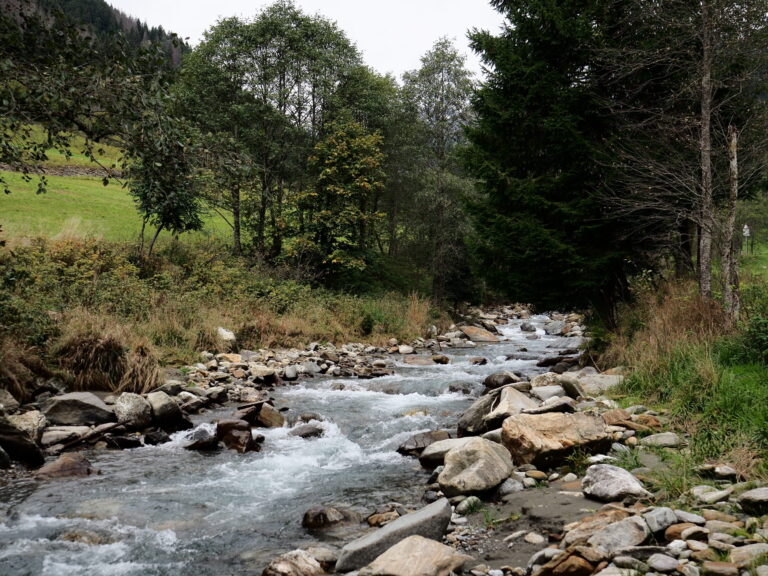
The project focuses on the monitoring and analysis of the river thermal regime in the Upper Noce Basin, within the framework of the Alto Noce River Park. The main objective is to support environmental protection and management actions by providing scientifically sound knowledge on the current and future thermal conditions of the river system, in a context of climate change.
Monitoring activities are designed with an anticipatory approach, aimed at collecting data to support future-oriented decision-making. This approach complements existing monitoring programs, including water quality monitoring conducted by the University of Bolzano, while the University of Trento focuses specifically on physical parameters, in particular water temperature and discharge.
The project addresses the following key questions:
- How much, and for how long, might the Noce River and its main tributaries warm up in the coming years under current climate change projections?
- Which mitigation strategies can be adopted to reduce potential thermal stress on aquatic biological communities?
Expected results:
1) Characterization of the current thermal conditions of the Noce River and its main tributaries;
2) Development of future thermal scenarios in relation to climate change;
3) Identification of potential critical situations for aquatic ecosystems;
4) Scientific support for adaptive water resource management strategies, with reference to ecological flows;
5) Strengthening of the participatory approach with stakeholders and experts involved in the project.
Contact:
Anisa Bica – anisa.bica@unitn.it
Partners:

Parco Fluviale Sarca
Period:
March 2025 – ongoing
Project description:
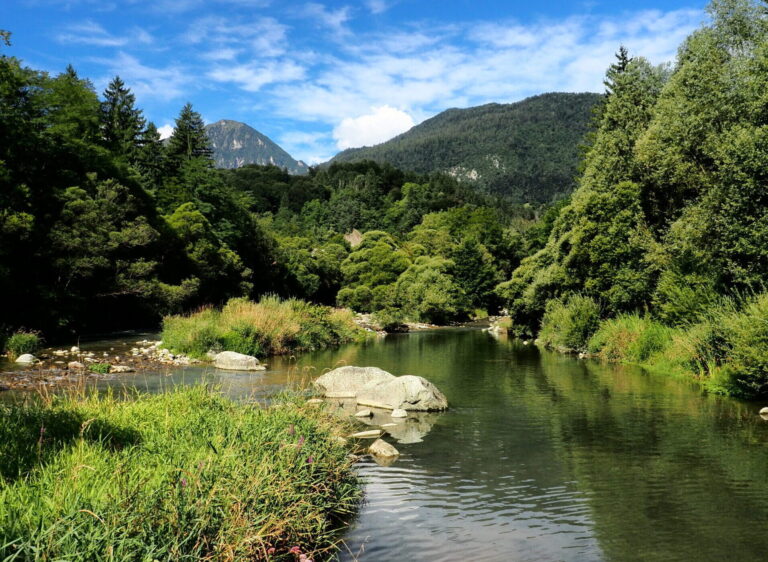
The project aims to deepen the understanding of the environmental dynamics of the Sarca River, in order to support management authorities in decision-making processes and contribute to improving the ecological quality of the river, while accounting for its multiple uses. The research activity focuses on two main directions:
- The study of the river thermal regime, with particular attention to periods of water overheating and to possible mitigation strategies to reduce impacts on the river ecosystem;
- The analysis of hydro-morphological conditions of the river channel, aimed at developing guidelines for river restoration interventions capable of improving the availability and quality of habitats.
The project integrates continuous monitoring, high-resolution field surveys and multidisciplinary analyses, and is framed within the sustainable management of the Sarca River Park, in the context of climate change adaptation.
Expected results:
1) Spatial and temporal characterization of the thermal regime of the Sarca River;
2) Identification of the main thermal criticalities and influencing factors (discharge, tributaries, morphology);
3) Assessment of the potential role of cold water tributaries in temperature mitigation;
4) Definition of scientifically based criteria for river morphological restoration interventions;
5) Technical and scientific support for the sustainable management of the Sarca River Park.
Contact:
Anisa Bica – anisa.bica@unitn.it
Partners:

MUDAR – Mozambique Integrated Urban Development by Actions and Relationships: Empowering Local Governance
Period:
2022 – 2025

Project description:
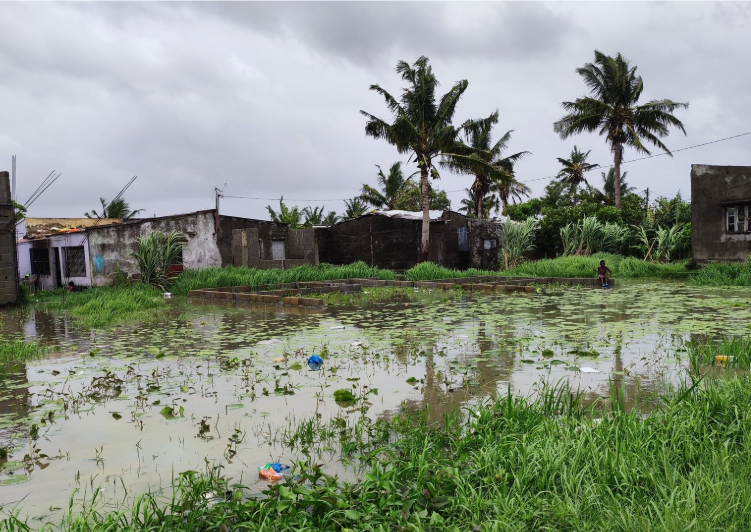
“MUDAR – Mozambique Integrated Urban Development by Actions and Relationships: Empowering Local Governance” funded by the European Union, aims at promoting good practices for local government and sustainable urban development by strengthening local partnerships.
The activities are divided into three main pillars: (1) Capacity building for local authorities (CCI-IFAPA); (2) Implementation of a pilot project for the regeneration of the informal neighbourhood of Macuti (UniTrento-UniZambeze); (3) Digitisation and creation of job opportunities (UniZambeze-CMB).
Within the second pillar, Unitrento investigates participatory approaches for urban planning in informal neighbourhoods with a special focus on (1) Nature-Based-Solutions for urban drainage systems and (2) urban waste management.
Expected results:
Implementation of a pilot project from the design solutions identified by the participatory process, focusing on drainage systems, open and green spaces, and sustainable urban waste management.
Contact:
Susanna Ottaviani – susanna.ottaviani@unitn.it
Partners:




Archive of Projects:
Scientific field activity carried out within Riverwatch ScienceWeek, an international event dedicated to the study of Balkan river systems. The research focused on the Sarandapors River, a tributary of the Vjosa/Aoos, and examined variations in habitat availability within a braided river reach in order to assess the potential effects of dams or water diversion on aquatic ecosystems.
International research project on transformative wildlife management, aimed at enhancing biodiversity protection and strengthening ecosystem service provision in shared and protected multi-use landscapes across Europe. Developed within the Biodiversa+ framework, the project contributes to current European research on biodiversity governance, conservation strategies, and the sustainable management of human-dominated landscapes.
Pilot project focused on the rehabilitation and collective care of primary school outdoor spaces through greening and regeneration interventions. The initiative addressed school courtyards mainly characterised by asphalt surfaces or poor maintenance conditions, with the aim of improving environmental quality, enhancing usability for recreational activities, and promoting a more sustainable and inclusive use of educational open spaces.
Participatory circular economy project developed in collaboration with Lafert S.p.A., focused on the production and recovery of electric motors within an international industrial group. The initiative explored strategies to improve sustainability in industrial processes by promoting circular approaches to resource use, manufacturing, and recovery practices.
Technical study commissioned by the public authorities of the Republic of Azerbaijan and carried out with the consultancy company Vita GmbH. The activity aimed to identify solutions to secure existing and future urbanization projects in the Demiraparan river basin, especially near the city of Qabala, through one-dimensional hydraulic modelling with HEC-RAS and the analysis of possible mitigation measures for flood-related criticalities.
Research project dedicated to the reinterpretation and promotion of Trentino’s First World War fortification system as a cultural, architectural, landscape, social, and ecological heritage. Through a multidisciplinary approach, the project supports new territorial valorisation strategies, museographic perspectives for mountain areas, and the development of a pre-feasibility pathway towards a possible UNESCO candidacy, also through physical and digital dissemination platforms.
Project aimed at introducing innovative water solutions to address climate change challenges and support agricultural sustainability in Lebanon. The initiative focused on improving water management practices in a context increasingly affected by environmental stress, with the broader goal of strengthening resilience in crop production systems.
Research project addressing multiple forms of environmental pollution affecting the so-called Fascia Trasformata area in Ragusa. The work focused on soil and water contamination related to agricultural waste, as well as air pollution caused by illegal fires, contributing to the broader understanding of the environmental impacts of intensive agricultural systems and unsustainable waste practices.
(2021-2025, Libya)
International cooperation project aimed at strengthening local public services in Libya through a permanent training mechanism delivered by Libyan universities to Libyan municipalities. Within this framework, the Chair contributed as technical partner to the Environmental Safety pilot project, including the validation of training-of-trainers activities on drinking water quality assessment through online modules and in-person teaching.
Collaborative initiative developed in cooperation with Jomo Kenyatta University of Agriculture and Technology. The project explores the potential of collective intelligence approaches in the African context, fostering international academic cooperation and contributing to research and knowledge exchange on innovation, participation, and local capacity building.
Project developed in Albania with the support of AICS Tirana and in collaboration with local and academic partners, including universities and NGOs. The initiative addressed environmental and territorial challenges through an international cooperation framework aimed at promoting sustainability, strengthening local capacities, and supporting integrated approaches to territorial development.
AICS-funded project led by the Chair as leading partner and developed in collaboration with Italian and Mozambican institutions. The initiative combined environmental cooperation, international partnership building, and local implementation activities in Mozambique, contributing to the development of sustainable practices and applied interventions in the local context.